Workshop Success · Sai Vidya · 11 June 2026
Hardware Design Thinking, proven in the room
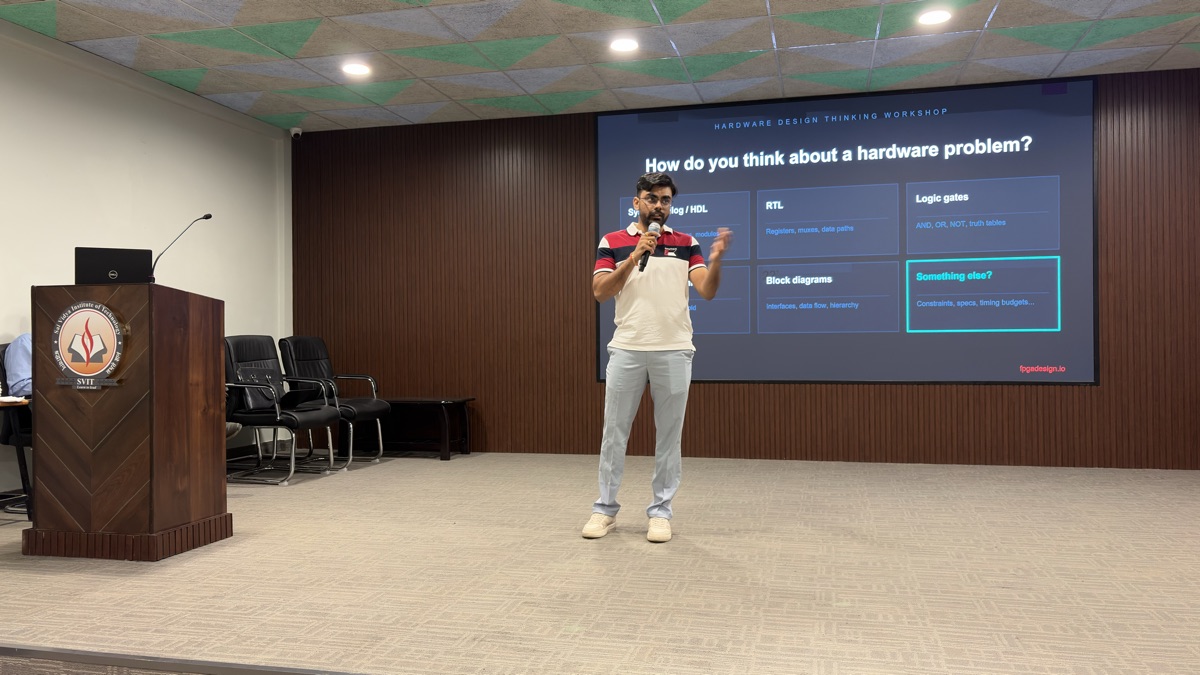
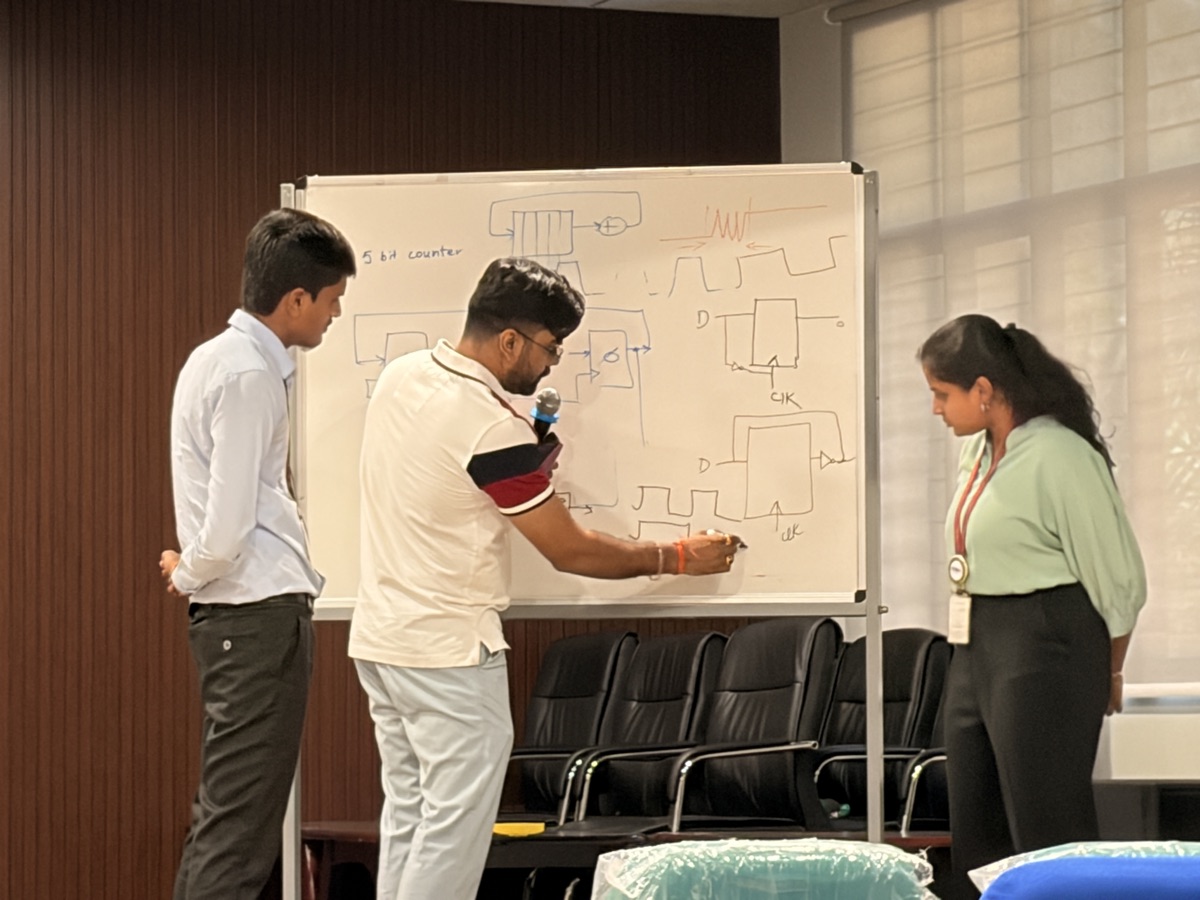
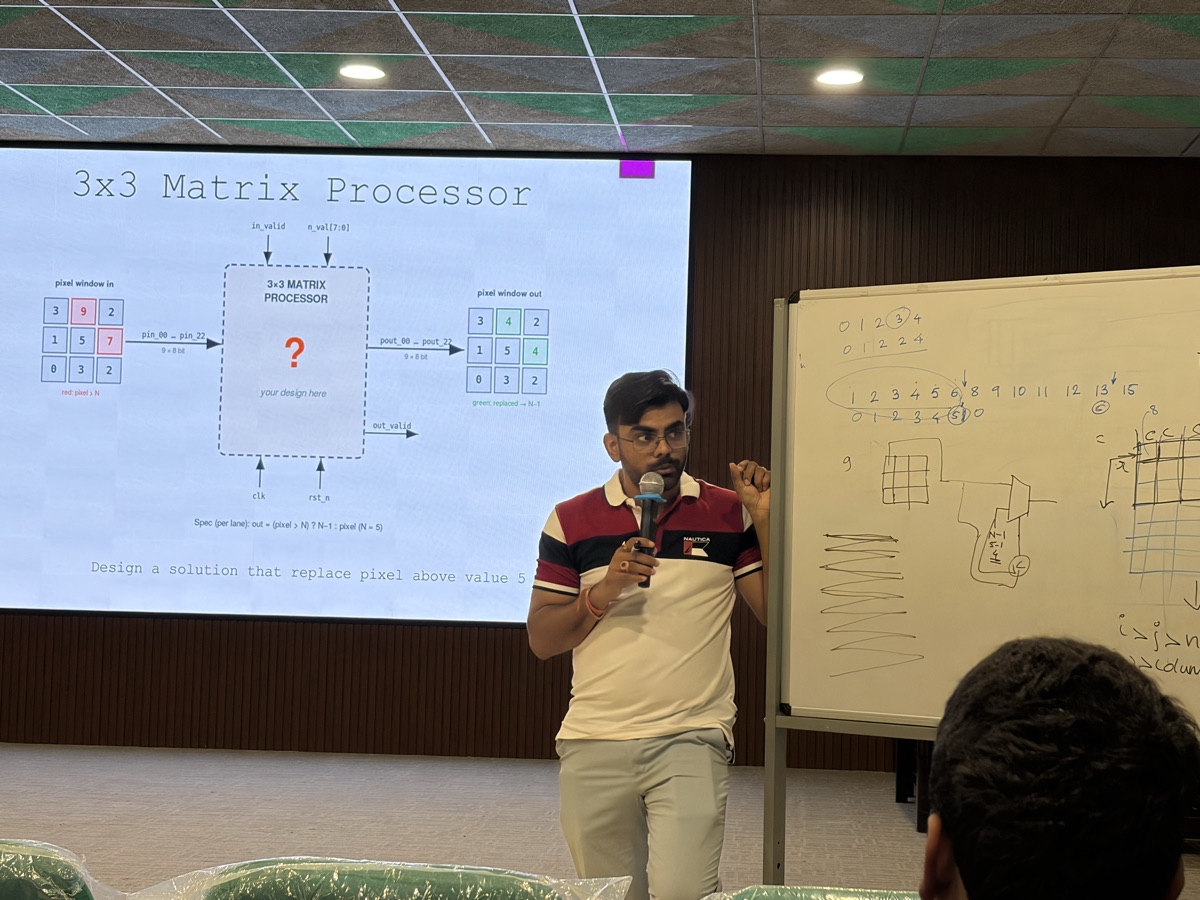
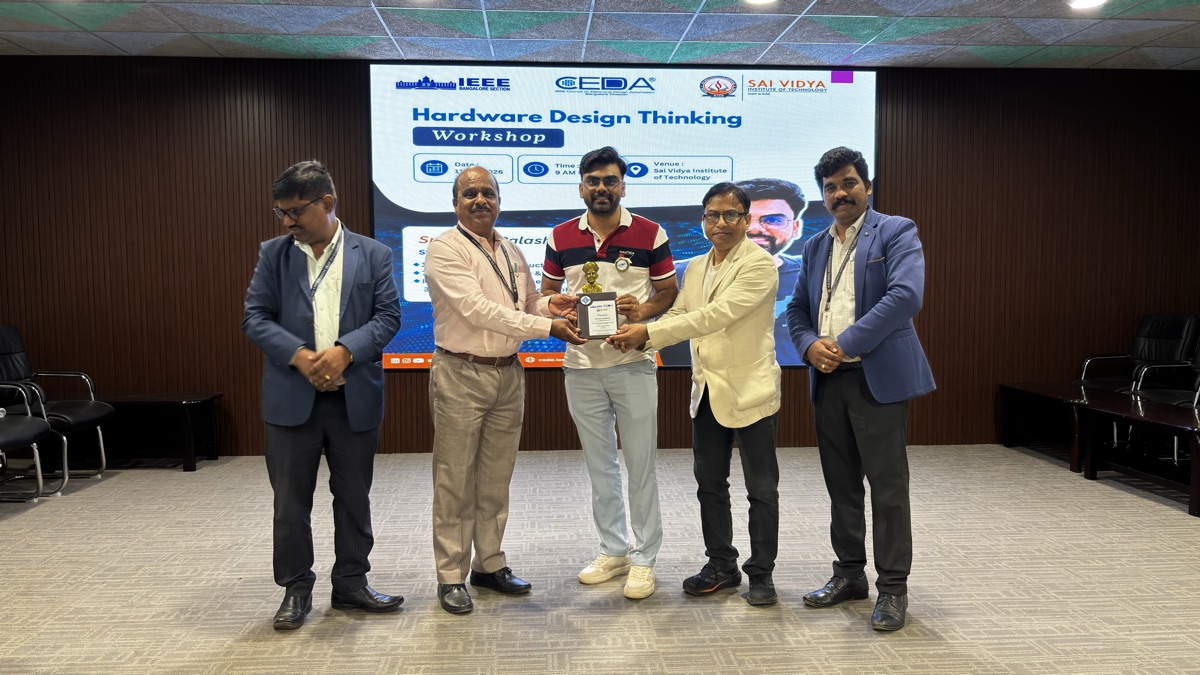
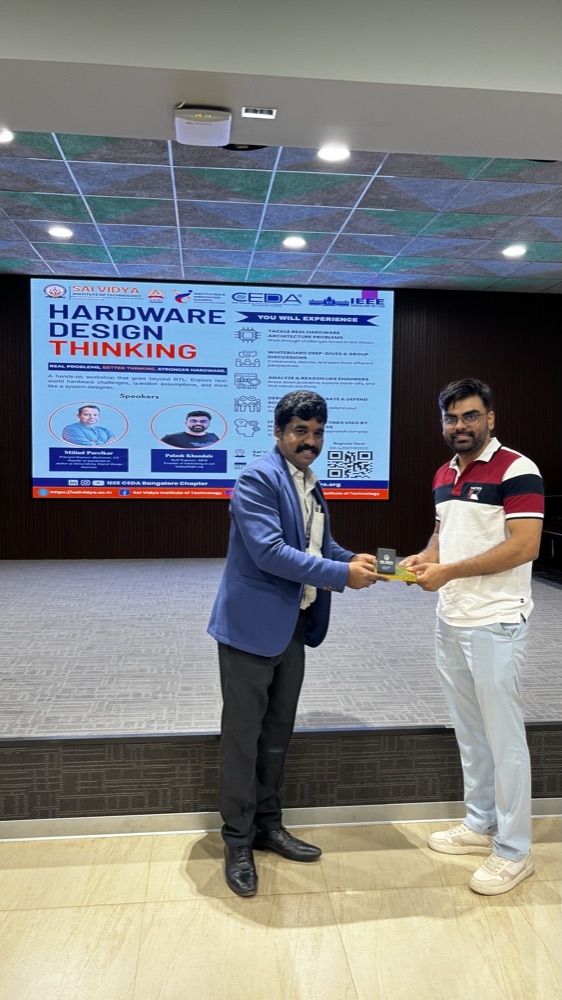
The first full-day Hardware Design Thinking workshop — hosted by the IEEE CEDA Bangalore Chapter with Sai Vidya Institute of Technology — put students in front of real silicon problems: a faulty block in a pipeline, a smartphone power-on waveform, a 3×3 matrix processor. No slides-only theory — whiteboards, debate, and design defense. Here is how the room responded.
29
participants surveyed
86%
rated the workshop HIGH on average
100%
rated it helpful or better — zero negative
100%
said they had room to interact & discuss
93%
rated the hands-on exercises HIGH for actually improving their understanding.
93%
rated the instructors' delivery & engagement HIGH.
79%
rated the workshop HIGH for sharpening how they think through hardware design.
Co-led with Milind Parelkar — Principal Engineer, Qualcomm US · Founder, fpgadesign.io · Author of Demystifying Digital Design Interview.
View the official IEEE record →